
What is a Forward Deployed Engineer? The person who makes AI actually work inside your business.
A Forward Deployed Engineer (FDE) embeds with your team, builds AI systems against your real workflows and real data, deploys them into the tools you already use, and stays until they're adopted and paying off. Not a prototype. Not a recommendation. Production systems your people use every day.
Shadows the workflow, hears "that's not how we do it," and changes the build the same day.
HubSpot, Make.com, Monday.com, WordPress, Zapier, Claude and OpenAI APIs, custom code where needed.
Every build ends with SOPs, runbooks and credentials in your accounts. No long-term dependency.
What is a Forward Deployed Engineer (FDE)? Plainly.
A Forward Deployed Engineer is an engineer who is deployed forward, out of the software company and into the customer's business, to make the technology work in that customer's real environment.
The term was popularized by Palantir, where engineers were sent into government agencies and Fortune 500 companies to configure software against messy, real-world data instead of waiting for the customer to figure it out. As AI moved from demos to deployments, the leading AI labs adopted the same model, because a language model that works in a demo still has to be wired into a CRM, trained on a company's own documents, guarded against failure, and adopted by people who have a job to do.
For a small or mid-sized business, that is exactly the gap. You know where AI could help. Nothing is in production. And you don't have an engineer who can build it inside the tools you already run on. A Fractional FDE fills that gap for a defined period, then hands it back.
- Systems in production with a named owner
- Hours returned to the team each week
- First-response time to new leads
- Weekly active users of each system
- Error and escalation rate per system
- Fixes the client makes without the FDE
Not tickets closed. Not hours billed. Outcomes.
One decides what to build. The other builds it.
Most companies that are stuck on AI don't have a strategy problem or an engineering problem. They have both, in sequence. Here is how the roles divide the work, and where the usual alternatives fall short.
| Fractional AI Officer | Forward Deployed Engineer | Staff-aug developer / agency | |
|---|---|---|---|
| Primary question | What should we do with AI, and how do we govern it? | How do we make this specific workflow work with AI, in production? | What's in the ticket? |
| Works with | CEO and leadership team | Operators, sales, ops, support and admin staff | A project manager |
| Output | Strategy, roadmap, policy, oversight | Deployed automations, agents, integrations, SOPs | Code or a prototype, handed over |
| Time pattern | 1–3 days per month | 2–5 days per week during a build sprint | Hourly, open-ended |
| Owns | The backlog the FDE builds from | The outcome: adopted, measured, handed off | The task |
| When it ends | Ongoing advisory retainer | When the owner can run it without the FDE in the room | When the budget does |
The two roles are built to pair. The AI Officer sets priorities and guardrails; the FDE executes the backlog and feeds what it learns back into the roadmap. Many clients start with one and add the other. Read about the Fractional AI Officer role.
Eight responsibilities. In that order.
This is the job, start to finish. If a proposal skips the first two or the last three, it isn't forward deployment, it's a developer with a new title.
Embed and discover
Shadow the workflow owners, map the current process step by step, find where the data lives and where the friction is.
Design the solution
Translate the business process into a one-page design: data flow, tools, model choice, guardrails, human checkpoints, failure handling.
Build
Ship automations, AI agents, chatbots, internal tools and integrations on your stack, no-/low-code first and custom code where it earns its place.
Integrate
Connect CRM, email, calendar, phone, forms, databases and third-party APIs. Handle authentication, rate limits and data hygiene.
Deploy and harden
Move from pilot to production with logging, monitoring, error alerts, rollback paths and documented ownership.
Drive adoption
Train the actual users, sit with them for the first weeks, fix what they trip over, iterate until usage is habitual.
Measure
Instrument every system for the metric it was built to move: response time, hours saved, conversion, error rate. Report it.
Document and hand off
SOPs, architecture notes, runbooks and admin credentials, so you own and can maintain what was built.
- Not a strategy or governance role; it executes against priorities set by leadership or the AI Officer
- Not a staff-augmentation developer working a ticket queue; the FDE owns outcomes, not tasks
- Not an IT or infrastructure administrator; hosting, networking and devices stay with your IT provider
- Not a long-term dependency; every build ends with a handoff you can run without the FDE
- You've bought AI tools, and nobody uses them past the first week
- Leads sit for hours, or days, before anyone responds
- Reports get assembled by hand every week from four systems
- Your agency or developer delivered something, and it broke the first time the data looked different
- You know the three workflows you'd automate, and you've known for a year
Typical builds, and what each one moves.
These are the systems that come up most in a 90-day sprint for a 5–50 person company. Each ships with a named owner, a success metric and an SOP.
New leads scored, enriched, routed to the right rep in the CRM, with an AI-drafted first response waiting for approval. Metric: first-response time.
SMS and email follow-up with booking, on consented channels only. Metric: appointments booked from leads that would have gone quiet.
A draft in minutes from the deal record, in your format, for a person to finish. Metric: hours per proposal.
Trained on your policies and documents, with a clear hand-off to a human. Metric: tickets resolved without escalation.
Ad platforms, CRM and forms pulled into a weekly summary that builds and sends itself. Metric: hours of reporting removed.
Invoicing, onboarding checklists, document intake. Metric: cycle time from request to done.
First system live by day 30. You own everything by day 90.
The engagement runs as a 90-day Build Sprint that ships two to four production systems, followed by an optional Embedded Support retainer that keeps them running and adds new builds in two-week sprints.
- Shadow the workflows
- Capture baselines
- One-page design per build
- Pilot on real data by day 21
- Logging and alerts
- Owner and SOP named
- Two-week sprints
- Side-by-side training
- Metrics per system
- Runbooks and access
- 90-day readout
- One new build per sprint
Two gates protect you: designs are approved before any build starts, and nothing is handed off until the owner can run it without the FDE in the room.
| Day | Activity | Who's in the room |
|---|---|---|
| Mon, wk 1 | Sprint planning: confirm the build, owner, success metric (30 min) | Sponsor + FDE |
| Tue–Thu, wk 1 | Build the pilot with real data; daily check-in with the workflow owner | Owner + FDE |
| Fri, wk 1 | Pilot demo to the owner's team; feedback captured (30 min) | Owner's team |
| Mon–Thu, wk 2 | Fix, harden, integrate, write the SOP; sit with users as they start using it | Users + FDE |
| Fri, wk 2 | Production release, metrics vs. baseline, next build queued (30 min) | Sponsor + owner |
- An executive sponsor and a named owner for each build, available 2–3 hours a week
- Admin access to the systems in scope within the first week
- Users willing to work side by side during adoption
- Decisions on design and scope within 2 business days
Fixed-fee, fixed-term Build Sprint at a Standard (3 days/week, 3 builds) or Intensive (5 days/week, 4–6 builds, on-site immersion weeks) level. Embedded Support is month-to-month. We'll scope it against your workflows in the first call.
The baseline is captured in week one. Day 90 is scored against it.
Every FDE engagement we run ships with a scorecard like this. Targets are set with you during immersion week, so the readout has something real to measure.
| Metric | Baseline | 90-day target | 12-month target |
|---|---|---|---|
| Systems in production with a named owner | 0 | 3 | 10+ |
| First-response time to new leads | Hours | Under 15 min | Under 5 min |
| Hours returned to the team per week | 0 | 25+ | 80+ |
| Weekly active users of each system | 0 | 80% | 95% |
| Error / escalation rate per system | n/a | Under 5% | Under 2% |
| Fixes the client makes without the FDE | n/a | 50% | 90% |
Illustrative targets for a 5–50 person company. Yours are set from your baseline.
Most FDEs know the model. Ours know the sale.
Have never had to prove a build produced revenue, only that it ran.
Can't build it. They sell you a tool and a monthly fee to operate it.
Builds the system and tracks it to the sale. AI in every client workflow since 2022, on top of 30 years of sales and marketing.
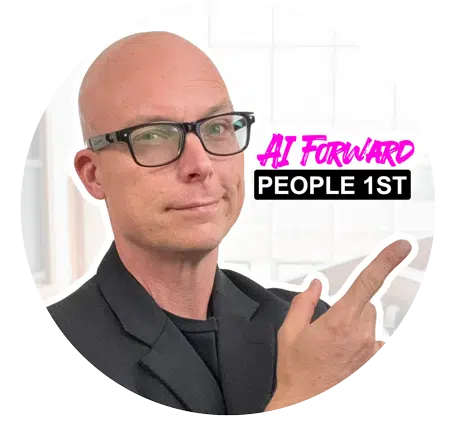
Chris Bernard has spent over 30 years in sales and marketing, eighteen of them leading Content Engagement Lab.
Big-brand work at Starcom MediaVest and Publicis gave us the tools and the questions. Your business has what those brands never will: the speed to put a working system in front of your team in weeks, not quarters.
Meet ChrisAI drafts. People decide.
An FDE is building systems that touch your customers, your CRM and your team's inbox. These are the rules every build ships with.
Controlled access.
Your systems, your permissions, your accounts. Credentials are never held by the contractor.
Human approval gates.
Draft-only, then approve-to-send, then auto-send, graduated on observed edit rates, never assumed.
Kill switches.
Every automated system can be stopped instantly, by design, and every sending system checks the switch first.
Consent and compliance.
Outbound on consented channels only. Voice AI is inbound and consented; we don't build outbound AI cold calls.
You own it. All of it.
All code, automations, prompts, configurations and documentation produced in the engagement belong to you. Content Engagement Lab is tool-agnostic and discloses any vendor referral relationship. The engagement is built to end with your team running the system, not with a renewal.
Questions people ask before they book the call.
What is a Forward Deployed Engineer (FDE)?
A Forward Deployed Engineer (FDE) is an engineer who embeds inside a client's business and builds working AI systems against the client's real workflows, real data and real users. Instead of handing over a prototype or a recommendation, the FDE designs the solution with the people doing the work, deploys it into the tools they already use, trains them on it, and stays until it is adopted and measurably paying off.
How is a Forward Deployed Engineer different from a Fractional AI Officer?
A Fractional AI Officer answers "what should we do with AI, and how do we govern it?" The role works with the CEO and leadership team one to three days a month and produces strategy, a roadmap and policy. A Forward Deployed Engineer answers "how do we make this specific workflow work with AI, in production?" The role works with operators, sales, ops and support staff two to five days a week during a build and produces deployed automations, agents, integrations and SOPs. The AI Officer sets the backlog; the FDE builds from it.
What does a Forward Deployed Engineer build?
Inbound lead triage, enrichment and routing into the CRM with AI-drafted first responses; missed-call and web-form follow-up agents with booking; proposal, quote and SOW drafting from CRM data; a customer support assistant trained on the company's own documents; reporting agents that pull ad platforms, CRM and forms into a weekly executive summary; and back-office automation such as invoicing, onboarding checklists and document intake.
How long does a Forward Deployed Engineer engagement take?
We run it as a 90-day Build Sprint. The first system is in production by day 30, two to four systems are live by day 80, and you own everything by day 90. An optional Embedded Support retainer keeps the systems running and adds a new build each sprint cycle.
Does hiring a Forward Deployed Engineer create a long-term dependency?
It should not. Every build ends with a handoff: runbooks, architecture notes, SOPs and admin credentials held in your own accounts. You own all code, automations, prompts and configurations, and one of the metrics we score ourselves on is the share of fixes you make without the FDE in the room.
Do I need a Forward Deployed Engineer or a developer?
A developer builds what's in the ticket. An FDE owns the outcome: discovers the workflow, designs the system, builds and integrates it, gets your people using it, measures it and hands it off. If you already have a precise spec and a team that will adopt whatever ships, a developer is cheaper. If what you have is a workflow that hurts and a tool nobody uses, you need an FDE.
What stack does the FDE work in?
Yours. HubSpot, Salesforce, GoHighLevel, Monday.com, WordPress, Make.com, Zapier and n8n, Claude and OpenAI APIs, with Python or JavaScript where custom code is the right call. We don't migrate you to a platform we prefer; we build inside the one you run on.
Bring the workflow. We'll bring the engineer.
Fifteen focused minutes on the three workflows you'd automate first. You'll leave knowing which one goes live by day 30 and what it should return.
Talk to an FDE